
Medical Gas Compliance Gaps in Hospitals: What Joint Commission Surveys Often Reveal
Medical gas systems are among the most heavily regulated and operationally critical infrastructure within a hospital. Oxygen, medical air, nitrous oxide, and other medical gases support life-sustaining therapies, anesthesia delivery, respiratory care, and countless other clinical applications. Any disruption in their availability or failure to maintain compliance with regulatory requirements can jeopardize patient safety, interrupt care delivery, and place an organization’s accreditation at risk.
For hospitals, maintaining medical gas compliance extends beyond ensuring cylinders are available when and where they are needed. It requires coordination among respiratory care, facilities, clinical engineering, environmental health and safety, supply chain, nursing, and department leaders. Respiratory care teams often play a central role in clinical use and departmental oversight, while supply chain teams may support receipt, storage, distribution, and availability of cylinders.
When The Joint Commission conducts an unannounced survey, findings rarely stem from a single catastrophic failure. More often, they expose everyday operational inconsistencies that have accumulated over time. Common medical gas compliance gaps in hospitals often include incomplete documentation, inconsistent cylinder storage, missed inspections or testing, and gaps in staff training.
Hospitals that perform well during these surveys typically don’t prepare differently in the weeks leading up to an audit; they operate differently every day.
Medical Gas Compliance Requires Cross-Functional Accountability
Medical gas compliance is often associated with facilities management or clinical engineering because these teams oversee critical infrastructure, maintenance, and system performance. While they play essential roles, compliance depends on much broader organizational coordination:
- Supply chain teams manage the receipt, storage, distribution, and availability of medical gas cylinders throughout the facility.
- Facilities personnel oversee central supply systems and infrastructure.
- Clinical engineering supports testing and equipment performance, while nursing and department leaders rely on consistent access to gases in patient care areas.
- Environmental health and safety teams help reinforce safe handling practices and regulatory requirements.
Each group contributes to the overall compliance picture, and breakdowns often occur where responsibilities intersect. If documentation is incomplete, cylinders are stored improperly, inspections are missed, or staff follow inconsistent procedures, even well-maintained systems can become compliance risks. Rather than treating compliance as the responsibility of a single department, leading healthcare organizations establish standardized processes that connect these operational functions and create shared accountability.
Compliance Gaps Joint Commission Surveys Commonly Reveal
The Joint Commission evaluates medical gas systems against established standards, including requirements derived from NFPA 99 and the Health Care Facilities Code. While individual findings vary between organizations, many surveys uncover the same operational themes.
Documentation That Doesn’t Support Audit Readiness
Documentation is one of the most common sources of survey findings. Hospitals are expected to maintain complete, organized, and readily accessible records that demonstrate compliance with inspection schedules, maintenance activities, testing requirements, and corrective actions.
When documentation is incomplete, inconsistent, or difficult to retrieve, organizations may struggle to demonstrate that required activities occurred, even if the work itself was completed. Paper-based records, decentralized documentation practices, and inconsistent recordkeeping make audit preparation more difficult and increase the likelihood of compliance gaps.
Inconsistent Cylinder Storage and Identification
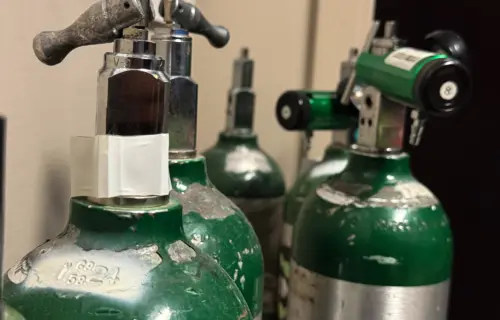
Medical gas cylinders must be stored safely and in accordance with regulatory requirements. Surveyors frequently identify issues such as unsecured cylinders, inadequate separation of full and empty cylinders, improper storage conditions, unclear labeling, or inaccessible shutoff valves.
These findings often reflect inconsistent operational practices rather than isolated mistakes. Without standardized procedures governing storage and handling throughout the facility, variations naturally emerge between departments and storage locations. Maintaining clearly organized storage environments, consistent labeling practices, and routine safety checks helps reduce these risks while supporting safer day-to-day operations.
Missed Inspection and Testing Requirements
Medical gas systems require routine inspections and testing to verify safe operation. NFPA 99 establishes inspection, testing, and maintenance requirements for medical gas and vacuum systems, while manufacturers may specify additional maintenance intervals for individual components.
Hospitals must also document these activities and verify system functionality following repairs or modifications before equipment returns to service. Missed inspection intervals, incomplete testing records, or inconsistent preventive maintenance practices can all become compliance concerns during a survey.
Staff Training and Process Knowledge Gaps
Even well-designed procedures depend on consistent execution. Joint Commission surveys frequently uncover knowledge gaps related to medical gas handling, emergency procedures, cylinder storage requirements, or staff responsibilities. In some cases, personnel may be unfamiliar with established protocols or uncertain about who is authorized to perform specific tasks. Ongoing education, documented training, and clearly defined responsibilities help reinforce consistent practices while reducing the likelihood of operational variation across departments.
Why These Compliance Gaps Persist
Most hospitals understand regulatory expectations and recognize the importance of maintaining compliant medical gas operations. Yet compliance gaps continue to appear because operational complexity makes consistency difficult to sustain.
Medical gas management spans multiple departments, hundreds of daily transactions, and numerous manual processes. Staffing shortages, competing operational priorities, decentralized documentation, and evolving regulatory expectations all contribute to variation over time. Without standardized workflows, each department may develop its own practices for receiving cylinders, documenting transactions, storing inventory, or communicating operational issues.
These small inconsistencies often go unnoticed until an audit brings them into focus. The challenge, therefore, is not simply understanding compliance requirements. It’s creating operational systems that make compliant execution repeatable regardless of staffing changes, workload fluctuations, or organizational growth.
Compliance Is Built Into Daily Operations, Not Audit Preparation
Hospitals that consistently demonstrate strong compliance share several operational characteristics. They establish standard operating procedures that clearly define responsibilities and expected workflows. Documentation is completed as part of routine operations rather than reconstructed during survey preparation. Inspection schedules are monitored proactively, and deviations are identified before they become recurring issues.
Operational visibility also plays an important role. Leaders can quickly access documentation, review process performance, verify completed activities, and identify trends that require corrective action. Rather than relying solely on periodic reviews, they continuously monitor the processes that support compliance every day, shifting compliance from a reactive exercise to an operational capability embedded within the organization’s daily workflow.
Standardizing Medical Gas Operations to Strengthen Compliance
Building a sustainable compliance program requires operational consistency supported by experienced personnel, standardized processes, and reliable performance measurement. Canon Business Process Services helps hospitals support medical gas compliance by applying Joint Commission-aligned standard operating procedures to daily logistics and inventory workflows. Cross-trained onsite logistics professionals manage the internal distribution of medical gases using documented workflows designed to promote consistency, accountability, and traceability throughout the inventory lifecycle.
Real-time inventory management technology provides visibility into cylinder locations, movement, and transaction history, while digital documentation supports chain-of-custody requirements and creates audit-ready records. Routine process audits, safety checks, escalation protocols, and performance reporting help reinforce standardized execution across departments while identifying opportunities for continuous improvement.
Canon’s Internal Logistics Excellence Program further supports operational consistency through structured performance management, standardized work practices, visual management tools, labor planning, and continuous process improvement. Together, these capabilities help healthcare organizations reduce administrative burden, strengthen compliance readiness, and support uninterrupted patient care without adding complexity to existing operations.
When Compliance Requires More Than Periodic Audits
Sustained medical gas compliance isn’t achieved through last-minute preparation before a Joint Commission survey. It is the result of consistent operational execution, standardized processes, and clear accountability across every stage of medical gas management.
Canon Business Process Services assists healthcare organizations in strengthening compliance readiness by embedding Joint Commission-aligned workflows, standardized operating procedures, and real-time operational visibility into daily logistics operations. Through experienced onsite teams, documented processes, and continuous improvement, Canon helps hospitals reduce compliance risk while supporting a safer, more efficient, and audit-ready medical gas program.