
What Poor PAR Level Management Is Costing Your Hospital Supply Chain (Labor, Stockouts, and Waste)
All supply chain teams understand the core mission of hospital operations: “get the supplies to the clinical teams for patient care.” It is a straightforward objective, but when routine supplies are unavailable on a medical unit, confidence in the entire supply chain operation will erode quickly.
Most clinicians understand when a national shortage or manufacturing disruption impacts availability. What is far more frustrating is when the product is already inside the hospital and it is not there for the care team when needed. PAR management is often a root cause for lack of supply and egregious overstocking.
“Good afternoon, Materials Management,” says the materials technician as she answers the ringing phone.
“Hello, we are out of IV extension sets and normal saline on ICU West again. Can you send some up?”
The technician recognizes the request immediately. Similar calls come from the unit almost daily. She keys the order, another staff member picks the supplies, and a third delivers the products to the floor.
What appears to be strong customer service is often a symptom of a poorly optimized PAR operation.
In this situation, clinical staff were interrupted from patient care workflow, supply chain staff were redirected into reactive work, and the organization absorbed significantly more labor than should have been required to support a routine replenishment need. Meanwhile, confidence in the supply chain team continues to decline with every repeated shortage call.
The Impacts of Poor PAR Management
In PAR optimization engagements, our team has found that poorly managed locations consistently demanded 20 to 30 percent more labor effort to count, pick, deliver, and support than well optimized counterparts. Across hospital operations, this can translate into the equivalent of four or five full time staff members consumed by excess product movement, reactive replenishment, avoidable returns and repeated service calls.
Supporting a poorly optimized PAR location is like running to the grocery store every day to buy a single bag of supplies you can barely fit in the pantry when you get home. Each trip feels necessary, but the cumulative cost in time, effort, and disruption far exceeds what a single well-planned shopping run would have required. These are routine medical supplies which are often already inside the hospital but are not available when they are needed for daily care.
Over time, the effects of product shortages will compound. Nursing units begin experiencing recurring shortages, triggering repeated calls for support and immediate deliveries. Supply chain teams become increasingly focused on firefighting daily issues rather than correcting the underlying causes. Labor effort rises while service perception declines, creating tension between clinical teams and supply chain operations. Eventually, the time and operational focus required to properly rebuild and optimize the PAR structure disappears entirely, trapping the organization in a cycle of reactive support.
The Problem of Product Versus Space
PAR management is not something that can be done solely from behind a computer. It requires an intimate knowledge of the operation, an understanding of the products themselves, and the careful management of the space allocated for supplies. The task becomes increasingly difficult as hospitals grow more specialized and patient care becomes more complex. Critical care units may support hundreds of unique products ranging from IV administration supplies to specialized patient positioning equipment. There are no perfect answers in PAR management. There are only tradeoffs.
In a recent PAR optimization effort, it was determined that the size of oral care kits had increased by approximately 75 percent and barely half of the product PAR fit within the allocated space. At the same time, changes in patient care standards required one kit per patient on a 28-bed unit while only eight kits physically fit in the location. Situations like this are common, but they can be difficult to identify and even harder to resolve.
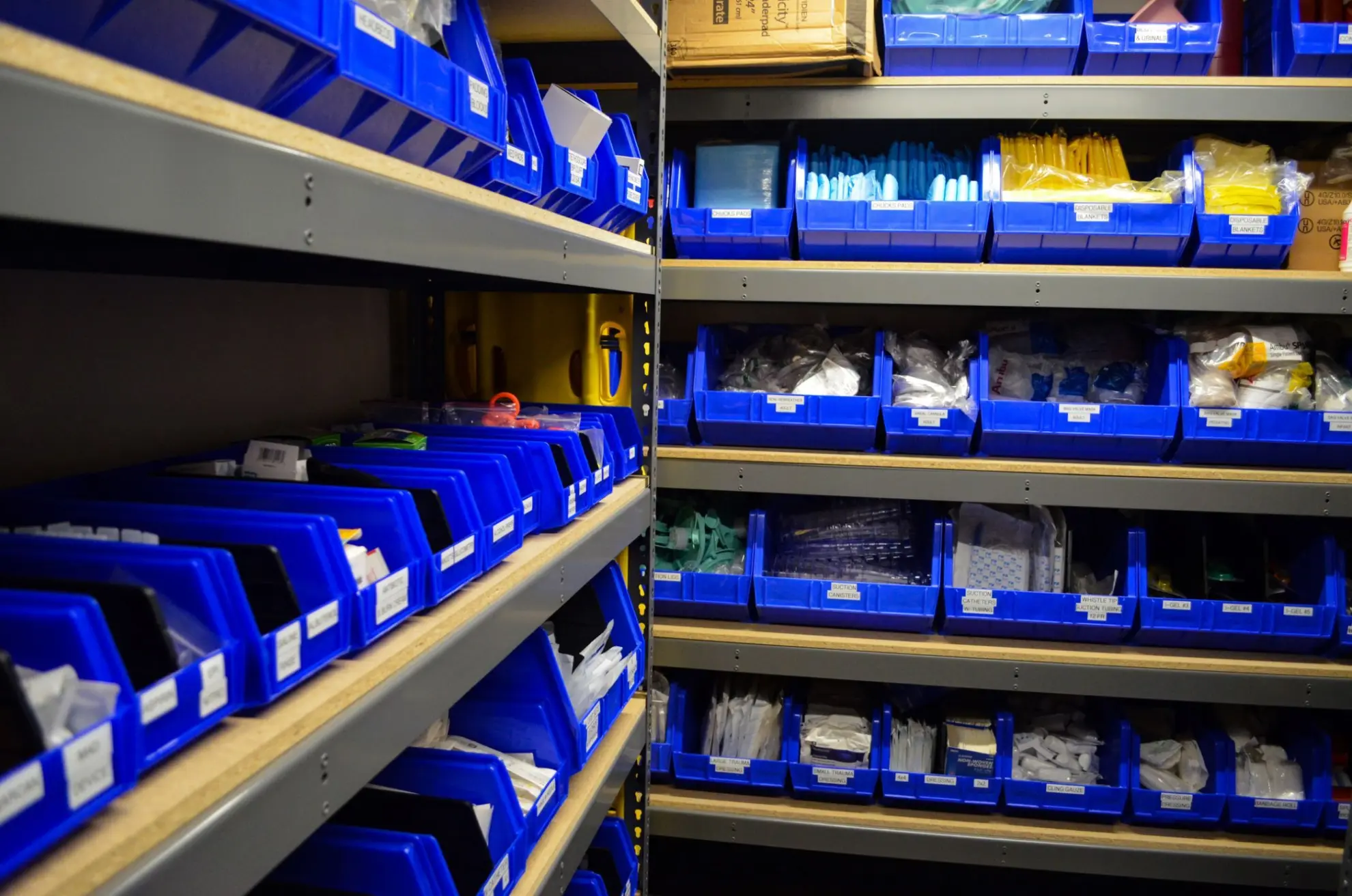
Overflowing supply rooms often create as many problems as empty shelves. Overstocked, slow-moving supplies consume valuable space needed for high-use products. Units may appear fully stocked while still lacking the specific items nurses need most frequently. Non-moving supplies can account for a very large expense for hospitals and lead to significant unwarranted expired products. Nothing erodes confidence in a supply chain operation faster than a supply room overflowing with inventory while staff continue searching for routine supplies.
Why PAR Level Optimization Is So Difficult
Many PAR locations are not built using true operational data. They are frequently copied from other similar supply rooms, based on estimates, or adjusted incrementally over time through a guessing game of repeated reactions to shortages.
ERP systems also do a poor job of providing the proper analytics needed to truly optimize healthcare PAR operations. Effective solutions require both advanced analysis and a strong operational understanding. The combination of these two elements can be difficult for many organizations and teams will often fall back to a costly process of trial and error.
Fear of stockouts often drives overfilling behavior. Materials management staff may fill every available space with product regardless of PAR levels in an attempt to avoid future shortages. Unfortunately, this frequently creates the opposite problem by generating excess inventory and promoting poor organization in order to accommodate unnecessary supply. Excess products can find their way into incorrect or hidden storage locations where expiration issues can build over time. In PAR optimizations, poorly managed PAR locations displayed as much as 30% of their products exceeding 6 month’s supply on the shelves, putting many at expiration risk.
Leaders and frontline teams overburdened by daily replenishment and reactive support for missing products often lack the bandwidth required to step back, analyze utilization patterns, rebuild layouts, and coordinate improvements with nursing teams. As a result, materials management departments find themselves trapped maintaining a struggling operation rather than improving it.
PAR Optimization Is an Operational Strategy
Effective PAR management is not simply an inventory exercise. It is a labor strategy, a nursing satisfaction strategy, and a patient care support strategy. It is also at the core of what Canon Business Process Services delivers for its healthcare partners.
Effective PAR management starts with strong and capable leadership. Prioritizing PAR improvement work while incorporating nursing staff input and balancing daily operations can be very challenging. PAR optimization is not a quick process; it is a progressive improvement that becomes an embedded way of working.
Rich and detailed data, from inventory fill rates through targeted time studies, is critical to setting objectives and measuring success. Canon Business Process Services brings proprietary PAR optimization software, labor modeling tools, and operational analytics that translate complex operational data into improvement priorities. PAR optimization and labor simulation modeling allow supply chain teams to understand the impacts of changes before the PAR levels are adjusted.
Teamwork across the organization is essential. Clinical teams are a wealth of operational knowledge, and changes to supply levels, additions, removals and reorganizations should never occur without thorough communication. Materials management operations require capable supply chain staffing models, data driven route planning, and workload balancing approach which incorporates frontline team feedback while improving engagement and accountability.
The most effective organizations recognize that PAR optimization is never fully complete. Canon Business Process Services combines operational leadership, extensive healthcare experience, and proprietary analytics to help organizations break the cycle of reactive replenishment and deliver reliable supply availability for the clinical teams who depend on it.