
Why Compressed Gas Vendors Shouldn’t Be Managing Your On-Site Inventory (And What to Do Instead)
Healthcare organizations often rely on compressed gas vendors to maintain a dependable supply of these essential products. While hospitals can choose to include critical receiving, storage, distribution, tracking, and replenishment in their vendor agreements, internal teams can also manage these functions onsite. Hospital-controlled inventory management can provide greater visibility and control over inventory and related operations.
When ownership of on-site inventory isn’t clearly defined, hospitals can experience reduced visibility, higher operating costs, inconsistent inventory practices, and unnecessary administrative burden. Treating medical gas inventory management as a dedicated logistics discipline, not simply an extension of the supplier relationship, helps healthcare organizations improve operational performance while supporting clinicians with reliable access to critical supplies.
Where Vendor Responsibility Ends and Hospital Responsibility Begins
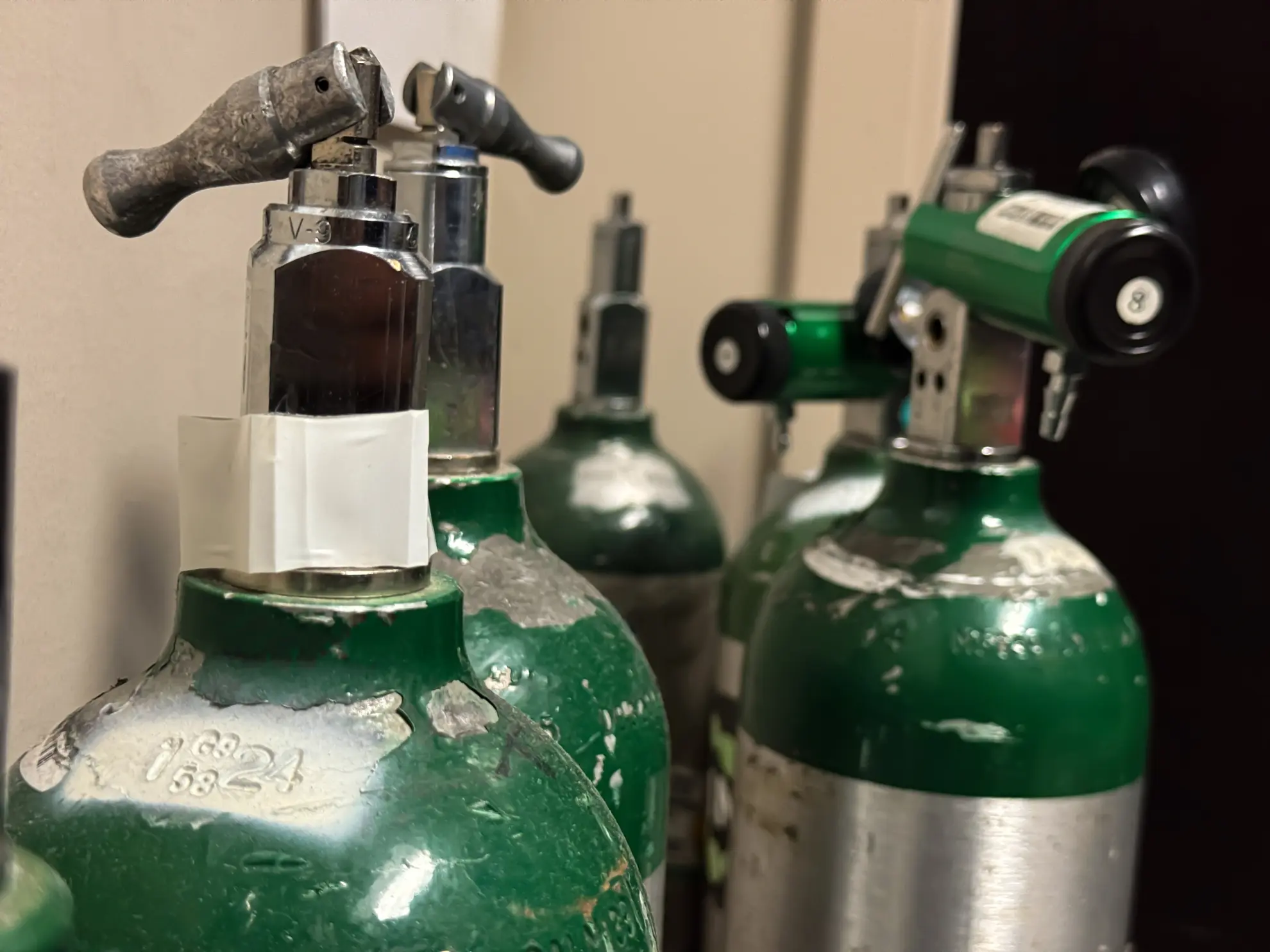
Compressed gas vendors play a vital role in maintaining a reliable supply of medical gases. They procure products, deliver cylinders, exchange empties, and help ensure hospitals receive the gases they need to support patient care. Once those cylinders enter the facility, however, hospital teams are responsible for:
- Receiving deliveries
- Transporting cylinders throughout the facility
- Maintaining appropriate PAR levels
- Replenishing inventory
- Documenting transactions
- Monitoring inventory across departments
- Ensuring empty cylinders are returned properly
While vendors excel at maintaining the external supply chain, they typically do not oversee daily inventory movement, optimize replenishment workflows, or monitor utilization across multiple departments. Therefore, these activities become operational logistics functions rather than supplier services. Without dedicated operational ownership, hospitals often find themselves relying on manual processes and fragmented responsibilities to manage one of their most critical inventories.
The Risks of Treating Onsite Inventory Like a Vendor Responsibility
Medical gas inventory presents unique operational challenges because cylinders are constantly moving throughout the hospital. From receiving docks and storage rooms, they often travel between operating suites, intensive care units, emergency departments, and patient floors. Without standardized processes governing these movements, small inefficiencies quickly accumulate into larger operational problems.
Limited Visibility Creates Inventory Blind Spots
Many hospitals continue to rely on manual inventory counts, paper documentation, or disconnected tracking methods to monitor compressed gas cylinders. As inventory moves between departments, visibility often decreases, making it difficult to determine where cylinders are located, how many are available, or whether inventory levels are sufficient to support demand.
To compensate for this uncertainty, departments may retain additional cylinders “just in case,” creating excess inventory in some areas while increasing the risk of shortages elsewhere. Lacking real-time visibility, hospital operations teams may be forced to make inventory decisions using incomplete information rather than current operational data.
Billing and Rental Costs Become Harder to Control
Limited visibility also creates financial consequences. When hospitals cannot accurately track cylinder locations or document returns, rental periods may extend unnecessarily. Departments may be charged for cylinders they no longer have, while finance teams spend valuable time reconciling invoices against incomplete inventory records. Without detailed reporting on cylinder movement, storage duration, and departmental utilization, identifying opportunities to reduce rental expenses or improve inventory utilization becomes significantly more difficult.
Clinical Staff End Up Supporting Logistics Work
Operational inefficiencies rarely remain confined to the supply chain. When inventory is difficult to locate or replenishment becomes inconsistent, clinicians and nursing staff often spend valuable time searching for cylinders, contacting multiple departments, or resolving inventory issues themselves.
These interruptions pull highly trained healthcare professionals away from direct patient care while creating unnecessary frustration across the organization. For healthcare leaders focusing on improving workforce efficiency, reducing these operational distractions represents an important opportunity to better support frontline caregivers.
What Dedicated Onsite Medical Gas Management Looks Like
Leading healthcare organizations increasingly recognize that compressed gas management requires the same operational discipline applied to other critical supply chain functions. Rather than relying on disconnected processes or departmental ownership, they establish standardized workflows governing every stage of the inventory lifecycle from receiving and storage to internal distribution, replenishment, reconciliation, and return. Consistent storage, handling, and chain-of-custody procedures also help support safety practices and compliance readiness across departments.
Clear standard operating procedures define how cylinders move throughout the facility, who is responsible for each step, and how inventory transactions are documented. PAR levels are established for each department based on actual utilization patterns to help ensure adequate supply while minimizing unnecessary inventory. Standardized chain-of-custody processes improve accountability by documenting cylinder movement throughout the hospital, while consistent replenishment procedures help maintain inventory availability without requiring clinical staff to intervene.
Technology Turns Medical Gas Inventory Into Actionable Operational Data
Effective compressed gas management requires healthcare organizations to gain comprehensive visibility into where cylinders are located, how they’re being used, and how inventory moves throughout the facility. Purpose-built inventory management technology transforms cylinder tracking into meaningful operational intelligence by providing real-time insight into inventory levels, cylinder locations, departmental utilization, and transaction history.
Instead of relying on manual counts or periodic audits, hospital operations and supply chain teams gain immediate access to information that supports daily decision-making. Reporting can include current inventory by location, department-specific consumption, cylinder storage duration, available inventory against established PAR levels, and receipt and return activity. This level of visibility also strengthens financial performance.
Accurate transaction records simplify billing reconciliation, help identify unnecessary rental costs, and provide departments with greater transparency into their compressed gas utilization. At the same time, operational dashboards support labor planning, identify workflow bottlenecks, and uncover opportunities for continuous process improvement. Data-driven inventory management replaces assumptions with measurable performance, allowing healthcare organizations to proactively manage compressed gas operations rather than reacting to inventory issues after they occur.
Building a More Resilient Operating Model
As hospitals continue to face staffing challenges, rising operating costs, and increasing expectations for operational efficiency, many are adopting a more comprehensive approach to onsite medical gas management. Rather than asking compressed gas vendors to oversee internal inventory processes, healthcare organizations are partnering with dedicated onsite logistics providers that assume operational ownership of the inventory lifecycle while working alongside existing suppliers. The result is a compressed gas management program that reduces administrative burden, improves visibility, strengthens operational consistency, and allows hospital staff to remain focused on patient care.
Canon Hospital Logistics delivers a comprehensive compressed gas management solution designed specifically for healthcare environments. By combining cross-trained onsite logistics professionals with standardized workflows and advanced inventory management technology, Canon manages every stage of internal compressed gas distribution from receiving and compliant storage to replenishment, tracking, reconciliation, and cylinder returns. Canon also embeds Joint Commission-aligned standard operating procedures into daily workflows, conducts routine process audits, and supports continuous improvement through its Internal Logistics Excellence Program.
Real-time inventory tracking provides visibility into cylinder locations and volumes throughout the facility, while chain-of-custody documentation and automated proof of delivery improve accountability for every transaction. Detailed reporting on inventory levels, departmental utilization, storage duration, billing reconciliation, and PAR compliance gives hospital operations and supply chain teams the insight needed to control costs and improve performance. Cross-trained onsite teams are available around the clock to respond to changing demand while helping hospitals maintain standardized operations across every department.
When Compressed Gas Management Requires a More Strategic Approach
Managing compressed gas inventory requires operational discipline, real-time visibility, standardized processes, and continuous performance improvement. As hospitals face increasing pressure to reduce costs, improve efficiency, and support clinical teams, many are rethinking how onsite medical gas logistics are managed.
Canon Business Process Services partners with healthcare organizations to design and implement comprehensive compressed gas management programs that strengthen operational performance without disrupting patient care. By combining experienced onsite logistics professionals, technology-enabled inventory management, and standardized workflows, Canon helps hospitals improve visibility, reduce administrative burden, and create a more resilient medical gas operation that supports both clinical and financial objectives.