

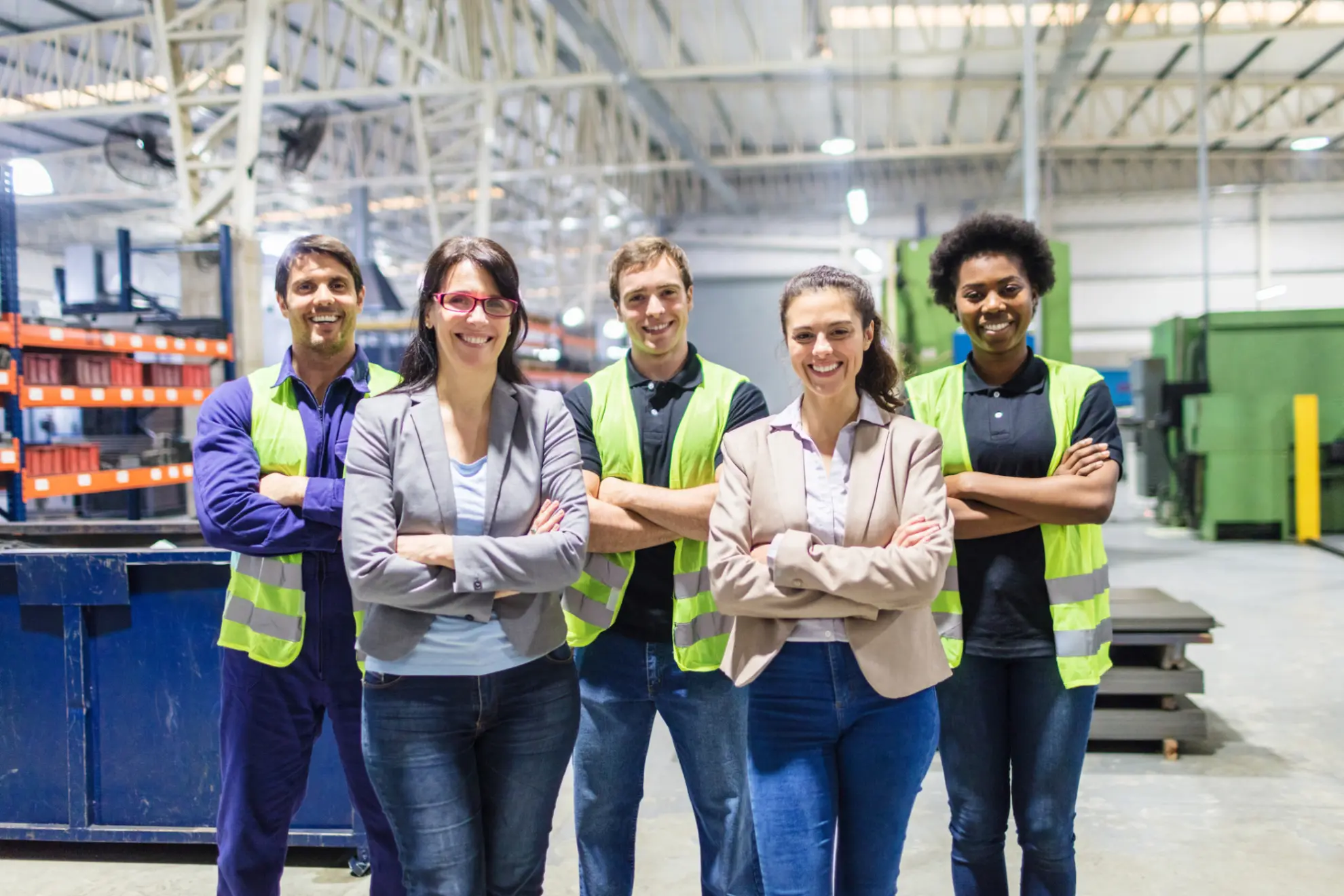
Overcoming Workforce Challenges: Strategies to Attract and Retain Top Materials Handling Talent in Manufacturing
The manufacturing labor shortage continues to strain internal logistics teams, where high turnover and inconsistent staffing make materials handling roles especially difficult to fill and retain. Yet these manufacturing workforce challenges extend beyond the warehouse floor. Breakdowns in receiving and inventory management create plant-wide operational and financial consequences—driving production delays, labor inefficiencies, excess inventory costs, and increased safety exposure across the facility.
However, when materials handling is treated as a core operational function rather than a reactive necessity, manufacturers can stabilize labor, improve throughput, and maintain agility without burdening production teams. Structured roles, clear ownership, and predictable coverage reduce chaos, support safer, more efficient work, and enable materials-handling employees to perform consistently—without shifting the burden to production teams. This operational clarity is critical not only for plant performance but also for attracting and retaining skilled materials handling talent in a competitive labor market.
To move from reactive staffing to a stable, people-centered operating model at scale, manufacturers increasingly turn to managed manufacturing support services—such as those provided by Canon Business Process Services—which bring dedicated expertise in workforce-managed internal logistics. Managed service providers, such as Canon Business Process Services, enable this shift by assuming end-to-end responsibility for materials-handling operations, stabilizing labor without the risk inherent in continuous hiring cycles or temporary staffing models. By integrating workforce management with operational execution, manufacturers can transform internal logistics into a dependable driver of efficiency, safety, and sustained performance.
Internal Logistics as a Driver of Manufacturing Performance
In manufacturing operations, internal logistics governs how materials are received, staged, kitted, and delivered to production lines within a manufacturing facility, directly affecting throughput, accuracy, safety, and production reliability. When material flow lacks clear ownership, visibility, or alignment with production schedules, delays and inefficiencies increase. However, when internal logistics is managed as a structured, accountable operation, manufacturers achieve more predictable output, higher accuracy, and stronger operational performance.
Why Materials Handling Roles Are Hard to Fill and Retain
Materials handling labor plays a foundational role in manufacturing performance. Yet these positions remain among the most difficult to staff and sustain. Key manufacturing workforce challenges extend beyond simple labor availability and reflect deeper organizational issues that undermine workforce stability and execution.
Scattered and Unclear Responsibilities
In many manufacturing facilities, materials handling tasks are distributed informally across multiple departments. Engineers, technicians, and production operators often share logistics responsibilities without defined ownership or standardized processes. This fragmented approach leads to missed handoffs, delayed material flow, and limited accountability that ultimately disrupts production schedules.
Reliance on Temporary Labor
To manage persistent staffing gaps, manufacturers frequently rely on temporary labor. What this approach offers in short-term relief, it exchanges for long-term instability. However, implementing managed internal logistics solutions improves continuity, minimizes turnover, eases the burden on permanent staff, and supports reducing temporary labor in manufacturing.
Labor-Intensive Processes
Many internal logistics functions still depend on manual picking, packing, sorting, and material movement, creating physical and procedural strain across the plant. These labor-intensive tasks are often undocumented and not cross-trained, leaving business continuity vulnerable to turnover, absenteeism, or seasonal labor changes. They also reduce operational flexibility, making it difficult to respond quickly to production spikes, schedule changes, or shifting customer demands.
Safety Concerns
Materials handling roles often involve heavy lifting, equipment operation, and constant movement across active production environments. Without structured safety programs and ergonomic considerations, the risk of injury rises. Incidents lead to downtime, compliance challenges, and higher insurance costs—while also making these roles less appealing to current and prospective workers.
How Materials Management Services Address the Manufacturing Labor Shortage
Internally managed materials management services provide manufacturers with a disciplined way to restore stability to internal logistics amid ongoing workforce disruption. By assuming accountability for materials handling as a defined operational function, these services reduce dependency on temporary labor while improving consistency across shifts, lines, and facilities.
Unlike traditional staffing approaches, this model embeds governance, training, and performance oversight directly into daily execution. Clearly defined roles, structured onboarding, and standardized workflows create predictability on the plant floor, allowing materials to move with purpose rather than urgency. Workforce engagement improves as expectations become clear and work becomes safer, more organized, and easier to sustain.
Most critically, onsite logistics outsourcing removes the hidden labor burden placed on production teams. Engineers can focus on design and process improvements, while technicians concentrate on their core functions, leading to higher productivity and greater job satisfaction. With materials handling labor managed end-to-end, manufacturers gain stronger throughput, fewer disruptions, and greater agility—without expanding headcount, cycling through short-term labor, or absorbing additional operational risk.
3 Proven Strategies to Attract and Retain Top Materials Handling Talent
Manufacturers facing labor challenges can implement three core strategies to stabilize internal logistics, enhance safety, and empower employees to deliver consistently high performance. Each approach strengthens workforce engagement while driving operational reliability and agility. Consult a Canon Business Process Services representative to tailor these strategies to your facility and achieve optimal results.
1. Standardizing Roles and Training Programs
Clear responsibilities and structured training are essential to retaining materials-handling talent. Define each role with distinct duties so employees understand expectations and accountability. In addition, comprehensive onboarding and cross-training allow workers to adapt quickly to production shifts.
For example, at a multi-shift facility, employees trained on multiple machines or lines can rotate seamlessly, reducing downtime and mitigating the impact of absences. Regular upskilling not only minimizes errors but also enhances throughput and operational resilience. The result is a workforce capable of sustaining high performance even under fluctuating production demands.
2. Enhancing Safety and Workplace Conditions
A safe work environment is a critical retention lever. Ergonomic equipment, preventive maintenance programs, and robust safety protocols minimize injuries and disruptions. In practice, ergonomic lifting stations, routine equipment inspections, and visual workflow cues improve safety, reduce downtime, and signal that employee well-being is top priority.
3. Leveraging Career Pathways and Recognition
Employees stay when they see opportunities that are within reach. Implement formal promotion tracks, skill-based progression, and public acknowledgement of high performers to strengthen engagement and retention. For instance, a plant might offer quarterly recognition programs for top materials handlers, tie bonuses to measurable performance metrics, and provide leadership development for supervisors. These initiatives not only retain talent but also cultivate a more capable and committed workforce prepared to meet evolving demands.
Partnering With Canon to Transform Materials Handling
Canon Business Process Services transforms internal logistics from a reactive, high-turnover function into a strategically aligned, high-performing operation. Leveraging our deep industry experience and proven best practices—including structured workforce optimization, standardized processes, safety programs, and continuous improvement frameworks—we empower manufacturers to stabilize labor, reduce turnover, and ensure materials handling aligns with broader manufacturing goals. Unlike temporary staffing solutions, CBPS embeds these best practices into daily operations, enabling manufacturers to maintain consistent performance without the risk and volatility of continuous hiring cycles.
When materials handling roles are stabilized and managed strategically, the benefits extend far beyond staffing consistency. Canon integrates materials handling into plant-wide operations to support critical business units, including production, purchasing, finance, and sales. Structured workflows, targeted training, and robust safety protocols enable teams to maintain smooth production flow, reduce errors, and increase throughput across the plant. Over time, these measures reinforce reliability, lower operational costs, and build a workforce capable of sustaining high performance even under shifting production demands.
By leveraging integrated systems, real-time analytics, and ongoing process improvement programs, operations leaders gain a clear view into performance trends, identify inefficiencies, and adjust resources before minor issues become major disruptions. Canon Business Process Services brings technology-agnostic expertise across enterprise resource planning (ERP) and warehouse management systems (WMS) platforms, optimizing existing systems while introducing supplemental software solutions where needed—including advanced inventory management, dashboards, and business intelligence tools—to improve visibility, workflow, and decision-making.
On the supply-chain side, Canon continuously evaluates opportunities to automate, optimize, and enhance processes, partnering with trusted vendors as needed to integrate technology seamlessly into the overall solution. This combination of expertise, best practices, and flexible technology integration transforms internal logistics into a resilient, agile, and strategically aligned operation that supports plant performance, workforce stability, and enterprise objectives.
Securing a Stable, High-Performing Materials Handling Workforce
Addressing the manufacturing labor shortage requires more than temporary fixes; it demands a structured, disciplined approach to workforce management. Standardized roles, safety improvements, and clear career pathways—when combined with integrated managed services from Canon—stabilize labor, improve productivity, and enhance operational agility. Partner with Canon Business Process Services to integrate these manufacturing materials management and internal logistics solutions at scale.
Contact us today to speak with a Canon representative and learn how you can attract, retain, and empower top materials-handling talent. Discover how to embed operational discipline, workforce development, and process intelligence directly into the production floor. Fill out the form below to begin building a safer, more reliable, and highly effective internal logistics operation.

Discover how digital transformation and outsourced internal logistics help manufacturers modernize operations, scale efficiently, and overcome labor constraints.
See how data and analytics improve manufacturing productivity by increasing visibility, optimizing warehouse operations, and strengthening internal logistics.
Learn five proven ways manufacturers optimize internal logistics to improve efficiency, accuracy, safety, and production performance.
Learn how manufacturers improve accuracy, reduce costs, and boost throughput by optimizing internal logistics and plant operations with an onsite 3PL provider.