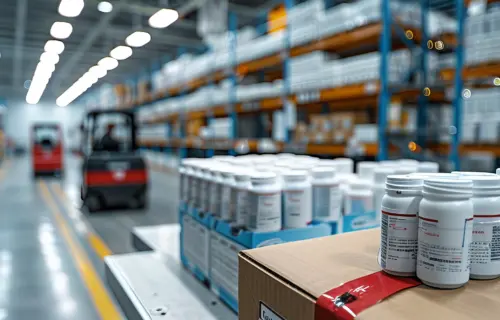


Lean Inventory Management for Pharmaceutical Warehouses
In pharmaceutical warehouse operations, inventory issues can quickly become production issues. Missing materials, expired stock, inaccurate system records, delayed replenishment, and staging bottlenecks can disrupt manufacturing schedules, increase waste, and create compliance risk. Every warehouse function, from receiving and storage to replenishment, picking, kitting, and outbound distribution, must balance operational efficiency with compliance requirements, product integrity, and time-sensitive production demand.
Within these environments, inventory management depends on precise control over material movement, lot traceability, storage conditions, and expiration-date management to ensure critical inventory remains available without creating unnecessary waste through excess handling, storage congestion, or expired materials. Even minor warehouse execution issues can disrupt manufacturing schedules, delay line-feeding activities, and reduce inventory accuracy across downstream operations.
Lean inventory management helps these facilities improve operational stability by reducing non-value-added activity, improving material flow, and standardizing warehouse execution processes. Rather than functioning as static storage environments, pharmaceutical warehouses operate as controlled inventory systems designed to support production continuity, First Expired, First Out (FEFO) inventory control, real-time visibility, and consistent inventory execution across the facility.
Core Lean Principles in Pharmaceutical Warehouse Operations
Rather than applying lean methodologies as isolated process improvements, regulated warehouses integrate lean principles across inventory placement, replenishment timing, lot rotation, storage zoning, and warehouse task execution. Each operational area contributes to faster inventory access, more controlled handling practices, and stronger alignment between warehouse activity and production requirements. The following operational disciplines help pharmaceutical organizations improve inventory utilization, reduce operational friction, and maintain more stable warehouse performance across day-to-day material-handling operations.
Warehouse Layout Optimization
Warehouse layout optimization improves facility performance by structuring physical space to reduce travel time, streamline material access, and align storage locations with inventory demand patterns. By aligning warehouse layout with inventory behavior and operational demand, pharmaceutical organizations improve space utilization, reduce internal handling time, and support more consistent execution of production-critical workflows such as line feeding and replenishment.
In pharmaceutical environments, layout design determines how efficiently materials move between receiving, storage, replenishment, picking, and staging areas. High-velocity inventory is typically positioned closer to dispatch and production-facing zones, while controlled or slower-moving inventory is stored in designated areas that meet environmental and regulatory requirements. Clear separation between functional zones also helps reduce congestion and limits unnecessary handling during order fulfillment and replenishment cycles.
Space Optimization and Storage Efficiency
Warehouses rely on deliberate storage allocation strategies to ensure available space is used efficiently without compromising inventory control or regulatory handling requirements. When pharmaceutical companies organize storage space around inventory behavior, rather than static placement, warehouses reduce congestion, improve accessibility, and maintain more consistent inventory availability. This structure also supports better responsiveness during demand shifts by ensuring capacity is used in a controlled and predictable manner rather than becoming a constraint on execution.
Within regulated pharmaceutical settings, inventory gets distributed across defined storage zones based on characteristics like temperature sensitivity, expiration profile, lot status, and handling requirements. Ambient, refrigerated, and restricted-access materials are physically separated, while high-turnover inventory is positioned to support faster access for replenishment and picking activities. This zoning approach reduces unnecessary material relocation and helps maintain clearer access paths across operational areas.
FEFO Inventory Control and Expiration Management
Expiration-sensitive inventory in pharmaceutical warehouses is managed through strict rotation rules that ensure materials closest to expiry are used first to prevent waste and maintain product integrity. When FEFO is consistently enforced, pharmaceutical warehouses reduce write-offs, improve inventory reliability, and maintain more predictable material availability for production schedules. This also strengthens compliance readiness by ensuring expiration control is embedded directly into daily warehouse execution rather than managed as a reactive exception process.
In regulated environments, FEFO governs how inventory is allocated during picking, replenishment, and line-feeding activities. Lot-level tracking within the warehouse management system ensures each unit is tied to a specific expiration date, enabling automated prioritization during order fulfillment. Materials approaching expiration are closely monitored and, when necessary, physically segregated from active inventory to prevent accidental consumption in manufacturing processes. Storage assignments are continuously adjusted based on shelf life, product status, and temperature or handling requirements to maintain compliance and reduce the risk of expired or non-usable stock moving through the system.
This level of control is particularly important in pharmaceutical manufacturing, where even a single unit of expired material can create significant quality concerns. If expired inventory is inadvertently introduced into production, it may trigger investigations, product holds, batch rejections, or the loss of entire production lots. By combining FEFO inventory rotation with strict segregation and traceability practices, pharmaceutical warehouses help protect product quality, support regulatory compliance, and reduce the financial risks associated with material expiration.
Automation and Real-Time Inventory Visibility
When automation and real-time visibility are integrated into daily warehouse execution, pharmaceutical organizations improve inventory accuracy, reduce manual reconciliation effort, and enable faster decision-making for replenishment and production support activities. This approach also strengthens operational responsiveness by allowing warehouse teams to identify constraints, shortages, or imbalances before they impact manufacturing schedules.
Pharmaceutical warehouses rely on system-driven inventory tracking to maintain accurate, up-to-date visibility of material location, status, and availability across all warehouse activities. Warehouse management systems, barcode scanning, and serialization technologies provide continuous updates as inventory moves through receiving, storage, replenishment, picking, and outbound processes. This real-time data capture ensures that lot status, expiration details, and inventory quantities remain synchronized across operational zones, reducing discrepancies between physical stock and system records.
GMP-Compliant Inventory Control and Traceability
Regulated pharmaceutical warehouse operations require strict control over inventory identity, movement, and handling to maintain compliance with Good Manufacturing Practice (GMP) standards. By embedding GMP-compliant controls into warehouse execution, pharmaceutical organizations reduce compliance risk, improve traceability, and ensure inventory integrity is maintained throughout all operational stages.
Every material movement is recorded and traceable at the lot or batch level, ensuring full visibility from receiving through storage, processing, and distribution. Controlled procedures govern how materials are sampled, released, quarantined, or rejected, while environmental and handling requirements are enforced throughout the warehouse lifecycle. This creates a structured chain of custody that supports audit readiness and regulatory inspection requirements.
Standardized Warehouse Processes and Control
When standardized processes are enforced across the warehouse, pharmaceutical organizations achieve higher operational consistency, improved training efficiency, and stronger alignment between warehouse execution and production requirements. This also supports more reliable inventory control by ensuring that every process follows the same validated steps across the facility.
Consistency in warehouse execution is achieved through standardized procedures that govern how tasks are performed across receiving, storage, replenishment, picking, kitting, and outbound operations. More specifically, standard operating procedures (SOPs), system-directed workflows, and defined handling rules ensure that warehouse activities are performed the same way regardless of shift, operator, or workload conditions. This reduces variability in execution, limits errors in material handling, and improves predictability across inventory movement processes.
Operational Impact of Lean Inventory Management in Pharmaceutical Warehouses
The impact of lean inventory management is most visible when inventory comes under operational pressure. Rather than relying on reactive adjustments to manage shortages, delays, excess stock, or expired materials, warehouses can operate with more predictable availability, clearer movement priorities, and fewer disruptions tied to handling inefficiencies or timing mismatches. These improvements affect waste levels, compliance performance, execution speed, inventory accuracy, and responsiveness to shifting production demand. The following sections show how lean inventory management translates into measurable improvements across daily warehouse execution.
Reduced Inventory Waste
Lean inventory management reduces inventory waste by minimizing excess handling, preventing unnecessary overstocking, and improving how inventory is positioned and rotated within the warehouse. In pharmaceutical environments, waste is typically driven by expiration exposure, redundant movement between storage zones, and misalignment between inventory levels and actual production requirements. When warehouse processes are structured around controlled replenishment, FEFO execution, and accurate demand signaling, fewer materials are left idle long enough to expire or become unusable. This leads to lower write-offs, improved utilization of stored inventory, and better alignment between purchased materials and actual production consumption.
Improved Compliance and Traceability
Pharmaceutical warehouses improve compliance performance by embedding traceability and control directly into every stage of inventory handling. Each material movement is tied to lot-level tracking and documented through system-controlled workflows that maintain visibility from receiving through final distribution. This reduces reliance on manual tracking, limits gaps in documentation, and ensures materials can be traced quickly and accurately during audits or investigations. As a result, organizations reduce compliance risk exposure while improving readiness for regulatory inspections and internal quality reviews.
Increased Warehouse Execution Efficiency
Warehouse execution becomes more efficient when material handling tasks are standardized, sequencing is optimized, and unnecessary movement between operational zones is reduced. In pharmaceutical environments, efficiency gains typically appear in reduced picking time, faster replenishment cycles, and fewer delays in staging materials for production or outbound shipment. Streamlined workflows reduce duplication of effort and allow warehouse teams to process higher volumes of inventory with fewer operational interruptions. This improves overall throughput and creates more stable day-to-day warehouse performance under variable demand conditions.
Strengthened Inventory Accuracy and Visibility
Inventory accuracy improves when system records remain continuously aligned with physical inventory through structured handling processes and real-time transaction capture. Pharmaceutical warehouses depend on accurate lot status, expiration tracking, and location-level visibility to ensure materials are always correctly identified and available for use. When discrepancies between system data and physical stock are minimized, planning and execution decisions become more reliable across procurement, production, and distribution functions. This leads to fewer inventory adjustments, improved planning confidence, and stronger operational control across the warehouse.
Faster Warehouse Responsiveness to Demand Changes
Lean inventory management improves responsiveness by enabling warehouses to adjust more quickly to shifts in production schedules, order volumes, and material priorities. When inventory is accurately positioned, properly categorized, and consistently tracked, warehouse teams can reallocate resources, adjust replenishment timing, and prioritize outbound activity without disruption. This reduces lag between demand signals and warehouse action. The result is a more agile warehouse operation that supports production continuity and reduces delays caused by inventory imbalance or operational bottlenecks.
What Is Lean Inventory Management in Pharmaceutical Warehousing?
Lean inventory management in pharmaceutical warehousing refers to a structured warehouse execution strategy focused on improving inventory flow, storage utilization, and material-handling efficiency throughout regulated warehouse operations. This approach emphasizes eliminating operational inefficiencies that slow inventory movement, increase handling requirements, create storage congestion, or reduce responsiveness to manufacturing demand.
Within regulated warehouse environments, lean inventory management improves coordination across receiving, put-away, replenishment, kitting, picking, and staging activities to support more efficient inventory execution throughout the facility. Structured replenishment strategies, optimized storage layouts, and standardized warehouse workflows help reduce unnecessary movement while improving inventory accessibility and warehouse throughput.
Lean inventory management also supports tighter operational control across regulated inventory environments through practices such as FEFO inventory rotation, controlled storage zoning, expiration-date prioritization, and lot-based inventory handling. Combined with warehouse management system (WMS) visibility and standardized execution procedures, these strategies help warehouses maintain organized inventory flow while supporting reliable material availability for manufacturing operations.
Why Does Lean Inventory Management Matter in Pharma Warehousing?
In daily operations, these challenges often show up as materials that are received but not available quickly enough, inventory that appears in the system but is difficult to locate on the floor, replenishment delays that affect line-feeding activities, and expiration-sensitive stock that is not prioritized correctly during picking or staging. Pharmaceutical warehouse operations must consistently balance inventory availability with space limitations, inventory aging risks, and changing production environments. As inventory volumes, SKU complexity, and regulatory oversight increase, inefficient warehouse execution can create bottlenecks that affect replenishment timing, staging efficiency, and overall manufacturing support performance.
Lean inventory management improves warehouse responsiveness by creating more predictable inventory movement across storage, picking, replenishment, and outbound workflows. More efficient layout strategies, standardized handling procedures, and better inventory positioning help reduce travel time, minimize staging delays, and improve how quickly materials move to production and distribution operations.
Such an approach also helps pharmaceutical organizations reduce operational waste tied to excess inventory, inefficient space utilization, redundant handling, and expiration-related product loss. By improving warehouse execution consistency and strengthening inventory coordination across the facility, lean inventory management supports higher inventory reliability while helping warehouses adapt more effectively to changing manufacturing demand.
Lean Warehouse Execution Outcomes Delivered by Canon Business Process Services
In regulated, high-SKU warehouse environments, structured lean execution can help improve productivity, control, and throughput by reducing variability and improving alignment between inventory availability and production demand. For Canon Business Process Services, these outcomes reflect the value of integrating warehouse execution with material flow, inventory control systems, and downstream manufacturing requirements.
Increased Pick Productivity Drives Material Flow and Manufacturing Readiness
Pick productivity improvements have contributed to a 33.8% reduction in operational deviations, driven by more consistent task execution, reduced travel inefficiencies, and improved inventory positioning for production-critical materials. This level of productivity gain translates into faster order cycle completion, fewer disruptions in picking sequences, and more reliable support for manufacturing schedules that depend on timely material staging.
Accelerated Inbound Processing Improves Availability of Critical Materials
Inbound processing improvements have contributed to dock-to-stock cycles that are up to 30% faster, reducing the time required for materials to become available for replenishment or production use. This accelerates intake workflows, reduces staging delays in receiving zones, and strengthens responsiveness for high-priority and time-sensitive inventory streams.
Strengthened Outbound Performance and Distribution Reliability
Outbound execution improvements have supported approximately 25% improvement in on-time dispatch performance through more structured staging processes, improved order sequencing, and reduced last-minute handling adjustments. This leads to more predictable shipment execution, fewer missed dispatch windows, and stronger alignment between warehouse output and downstream delivery or production schedules.
Why Organizations Choose Canon to Execute Lean Methodologies in Pharmaceutical Warehousing
Pharmaceutical organizations often look to Canon Business Process Services’ lean warehouse execution model when operational consistency, regulatory discipline, and production alignment must be sustained across complex, high-volume inventory environments. Canon integrates structured execution, inventory governance, and standardized workflows directly into day-to-day warehouse operations, rather than focusing on isolated efficiency initiatives. This approach is especially critical in regulated pharmaceutical environments where variability in warehouse execution can directly affect inventory integrity, compliance readiness, and manufacturing continuity.
By aligning people, processes, and systems within a controlled operating framework, organizations gain greater predictability in material flow, improved execution discipline, and stronger overall warehouse reliability. The result is a warehouse operation that functions as a controlled extension of the manufacturing supply chain—supporting consistent inventory availability, reducing execution risk, and enabling more resilient performance across receiving, storage, replenishment, kitting, and outbound distribution activities.
For organizations looking to improve warehouse performance in regulated environments, Canon Business Process Services provides scalable operational support to assess current-state execution, identify inefficiencies, and implement lean inventory strategies that strengthen control and improve end-to-end warehouse performance. Contact us to speak with a team member about implementing lean inventory management methodologies in your pharmaceutical operations.