
Digital Mailroom Automation for Regulatory Compliance and Enterprise Document Workflows
Digital mailroom automation supports regulatory compliance and enterprise document workflows by converting incoming mail and documents into controlled digital information that can be classified, routed, tracked, secured, and audited through standardized workflows.
Many enterprises receive important documents through physical mail, email, portals, and other intake channels. When those documents enter the business through manual or inconsistent processes, compliance gaps, delays, duplicate handling, and limited visibility can affect downstream workflows. For example, a document may sit in an inbox waiting for review, be routed to the wrong department, or move between employees without a consistent record of when it was received or how it was handled.
These challenges become more significant when organizations manage sensitive or compliance-related information. The resulting gaps can increase operating costs and create additional compliance, remediation, and oversight challenges.
What happens at intake can influence how effectively information moves through the rest of the organization, making it important to establish consistent controls over how documents are captured, classified, routed, and tracked. By automating these processes, organizations can create a more controlled entry point for enterprise information while connecting incoming documents to the systems and workflows responsible for managing business-critical processes.
Why Enterprise Document Workflows Break Down at the Point of Intake
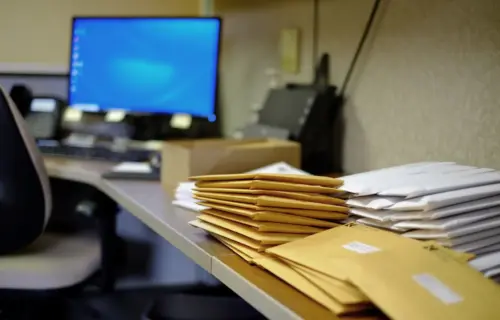
Enterprise document workflows can begin to break down before a document ever reaches the process where it is needed. When employees must manually determine where incoming information belongs, organizations can lose time, visibility, and control at the earliest stage of the document lifecycle. For compliance-sensitive or time-critical documents, these gaps can create downstream consequences that are difficult to resolve once the information is already in motion.
Manual sorting can delay time-sensitive documents, particularly when employees must determine where each item belongs before it can enter a downstream workflow. Documents may also be misdirected or handled by multiple people, increasing the risk of lost information, duplicate processing, and unnecessary handoffs.
Inconsistent indexing creates another challenge. If documents are labeled or categorized differently depending on who processes them, employees may have difficulty locating information later. This can affect retrieval times and make it harder to establish a clear record of how a document moved through the organization.
The problem can be especially pronounced when physical and digital intake processes operate separately. A business may have one process for incoming mail, another for email attachments, and additional processes for documents submitted through portals or other channels. Without a standardized approach, information can be fragmented across systems and departments.
These disconnected processes can also limit visibility into compliance-sensitive documents. If an organization cannot consistently determine when a document was received, who handled it, where it was routed, and whether an exception occurred, it may have less control over the document workflow as a whole.
A structured approach to managing incoming correspondence can help organizations establish a more controlled intake environment. Automation then allows a digital mailroom to apply consistent routing, tracking, and handling rules at scale, helping reduce the gaps that can disrupt complex enterprise workflows.
How Digital Mailroom Automation Creates a Controlled Intake Process
Digital mailroom automation standardizes the first point of entry for business documents, helping organizations move from manual intake activities toward more consistent, technology-enabled workflows. The goal is not simply to digitize incoming correspondence. It is to establish a controlled path for information from the moment it enters the organization, reducing unnecessary handoffs and helping ensure documents reach the right people, systems, and workflows more consistently.
The process typically begins with document scanning and capture, which converts physical correspondence into digital information that can be processed alongside documents received electronically. Optical Character Recognition (OCR) and intelligent data capture technologies can then help identify relevant information within documents, reducing the need for employees to enter data manually or interpret every document from scratch.
From there, AI-supported classification can help determine the type and purpose of incoming documents. Metadata can be applied to improve organization and retrieval, while automated routing rules can direct information to the appropriate department, employee, or downstream workflow. This creates a more structured progression from intake to action; instead of relying on an employee to determine what should happen to each document, automated processes can apply predefined rules based on document type, extracted information, or other workflow criteria.
Exception handling remains an important part of this process. Not every document will be recognized or classified correctly, and some information may require human review. A well-designed automated workflow does not attempt to eliminate human involvement entirely; instead, it can identify exceptions and direct them to the appropriate employee while allowing routine documents to continue through established workflows.
Once captured and classified, information can be delivered into enterprise content management (ECM), enterprise resource planning (ERP), customer relationship management (CRM), case management, or other workflow systems. This integration helps ensure that the digital mailroom functions as part of the broader document ecosystem rather than as an isolated scanning operation.
How Mailroom Automation Supports Regulatory Compliance
Mailroom automation supports compliance by making document intake more consistent, traceable, secure, and auditable from the moment information enters the organization. For regulated enterprises, compliance is not limited to what happens after a document reaches its final destination. Organizations may also need appropriate controls over how information is received, handled, accessed, transferred, and retained. Automating the intake process can provide greater consistency in how these actions are performed, helping organizations establish more controlled and traceable regulatory compliance workflows.
Establishing a Traceable Record of Document Intake
Time-stamped receipt information can help establish when documents entered the organization. This information can be particularly valuable when workflows depend on response timelines or when organizations need to demonstrate that information was received and processed according to established procedures. Automation can also improve chain-of-custody visibility by creating a more consistent record of document movement. Rather than relying on manual tracking or individual employees’ knowledge of where an item was sent, organizations can establish standardized routing rules and capture workflow activity throughout the process.
Controlling Access to Sensitive Information
Access controls are another important consideration. Documents containing sensitive or confidential information can be directed according to predefined workflows, helping limit unnecessary handling and supporting role-based access practices.
Creating Greater Audit Visibility
Audit trails can provide additional visibility into document activity. Depending on the systems and controls implemented, organizations may be able to track events such as document receipt, classification, routing, review, and processing. This information can support internal oversight and help organizations investigate exceptions or identify gaps in established processes.
Supporting Retention and Disposition
Automation can also support retention and disposition processes by helping ensure that documents are consistently classified and connected to the appropriate records management workflows. Document management practices play an important role in how enterprises organize, store, retrieve, retain, and manage information throughout its lifecycle.
The goal is not to suggest that automation alone makes an organization compliant with every applicable law or regulation. Compliance requirements vary by industry, jurisdiction, and document type. Instead, automation provides process controls, visibility, and consistency that organizations need to support their broader compliance programs.
Connecting Digital Mailroom Automation to Enterprise Document Workflows
A digital mailroom should not operate as a standalone scanning function. Its value increases when incoming information can move directly into the enterprise workflows that depend on it. When intake is disconnected from downstream workflows, digitizing a document may simply shift manual work from the mailroom to another department. The greater value comes from connecting capture and classification to the processes that determine what happens next.
For example, a document received through the mailroom may initiate a claims process, invoice workflow, customer service request, HR process, legal review, contract management activity, or compliance-related procedure. In each case, the objective is not simply to digitize the documents. Rather, it is to ensure that the information reaches the right process with the appropriate context and controls.
In claims processing, for instance, incoming correspondence and supporting documentation may need to be captured, classified, and routed to the appropriate claims workflow. In invoice processing, captured information often moves into financial systems for validation and approval. Customer correspondence may need to be connected to a CRM or case management platform, while legal notices and contracts often require specialized routing and retention processes.
This integration creates a continuous flow of information from intake through completion. Instead of creating a digital copy that still requires employees to manually determine what happens next, automation can connect document capture and classification with downstream systems and workflow rules. The result is a more cohesive enterprise document workflow in which the point of intake becomes part of the organization’s broader information management strategy.
Why Automation Improves Visibility, Speed, and Accountability
The operational value of mailroom automation extends beyond faster document processing. By standardizing how information enters the organization, automation can give teams greater visibility into where documents are, what has happened to them, and what needs to happen next.
Automated routing reduces delays associated with manual handoffs and helps information reach the appropriate workflow more quickly. Fewer manual touchpoints also reduce opportunities for duplicate work, misplaced documents, and inconsistent processing.
Greater visibility can make it easier for organizations to understand document status throughout the workflow. Depending on the systems involved, teams may be able to identify where documents are in the process, recognize bottlenecks, and monitor exceptions that require additional attention.
Automation helps establish more consistent service levels. When routing and processing depend less on individual employees remembering where documents belong, workflows become less vulnerable to staffing changes, workload fluctuations, or gaps in institutional knowledge.
Reporting and performance management provide another layer of accountability. Organizations can use workflow data to identify recurring exceptions, evaluate processing performance, and determine where additional process improvements may be needed.
This is especially valuable for enterprises managing complex intake environments while maintaining consistent controls and visibility across document workflows. Rather than viewing the mailroom as a collection of administrative tasks, organizations can use automation to create greater operational visibility from the point information enters the business.
What to Look for in a Digital Mailroom Automation Partner
Enterprise document intake often spans multiple channels, departments, systems, and control requirements. As a result, implementing automation successfully requires more than introducing new capture or routing technology. Organizations need to understand how information moves through the business, where manual intervention creates risk or delay, and how intake processes connect to downstream workflows. The right partner brings these elements together through workflow design, technology integration, process management, and ongoing performance oversight.
Workflow Assessment and Process Design
Organizations should look for a partner that can begin with a workflow assessment to understand how information currently enters the business, where bottlenecks occur, and which processes may benefit from automation. The right approach should account for both technology and the people responsible for managing exceptions, sensitive information, and complex workflows.
Secure Document Intake and Capture
Secure intake process design is another important consideration. A partner should be able to evaluate how documents are received, captured, classified, indexed, routed, and delivered into downstream systems while considering the organization’s security, compliance, and operational requirements.
Scanning and intelligent capture capabilities should be paired with effective classification and indexing. These functions help transform incoming documents into structured information that can be used by enterprise systems rather than simply creating digital images of paper documents.
Enterprise System Integration
Integration capabilities are equally important. A digital mailroom automation strategy should be designed to connect with the organization’s existing ECM, ERP, CRM, case management, and workflow environments wherever appropriate.
Reporting and Performance Management
Organizations should also consider reporting and performance management capabilities. Visibility into process volumes, exceptions, routing, and workflow performance can help identify opportunities for continuous improvement and provide greater accountability across the document lifecycle.
Scalable Service Delivery
Finally, scalability matters. A digital mailroom automation partner should be able to support the organization’s model, whether that involves onsite, offsite, or hybrid services. The right solution should be capable of adapting as document volumes, business processes, technology environments, and organizational requirements change.
Building More Compliant Enterprise Workflows With Canon Business Process Services
Canon Business Process Services brings together document capture technology, workflow design, secure handling processes, performance reporting, and managed service support to help organizations address complex document intake challenges through a coordinated operating model. This combination of technology, process expertise, and operational support can be particularly valuable for enterprises that need to manage complex intake environments while maintaining consistent controls and visibility across document workflows.
Through digital mailroom and digital intake services, organizations can create more structured processes for capturing and moving information into the workflows and systems where it is needed. By connecting intelligent intake, document capture, workflow automation, and reporting, organizations can reduce reliance on manual document handling while improving visibility into how information moves through the enterprise.
This approach supports broader efforts to modernize enterprise document processes and make workflow execution more consistent. For organizations looking to improve control at the point of intake, digital mailroom automation can serve as an important component of a broader information management strategy. It can help create a more standardized intake process, support compliance-aware controls, and move business-critical information through enterprise workflows more efficiently.
As part of a larger digital transformation strategy, these capabilities can help enterprises build document workflows that are not only more efficient, but also more visible, scalable, and responsive to changing operational requirements.